
Small Business Bookkeeping

Income, Revenue, Sales: Are They the Same?
Many small business owners use the words income, revenue, and sales as if they mean the same thing. That is completely understandable. In everyday conversation, they often overlap. But when you are reviewing financial reports, applying for financing, setting a budget,...

Assets, Liabilities, and Equity: The Core Terms Every Owner Should Know
If you own a small business, there are a few financial terms that can make a big difference in how confidently you make decisions. Three of the most important are assets, liabilities, and equity. These are the building blocks of your balance sheet, and understanding...

What Is a Chart of Accounts?
If bookkeeping feels confusing, the chart of accounts is one of the best places to start. It may sound technical, but the idea is actually simple: a chart of accounts is the organized list of all the financial categories a business uses to record its transactions....
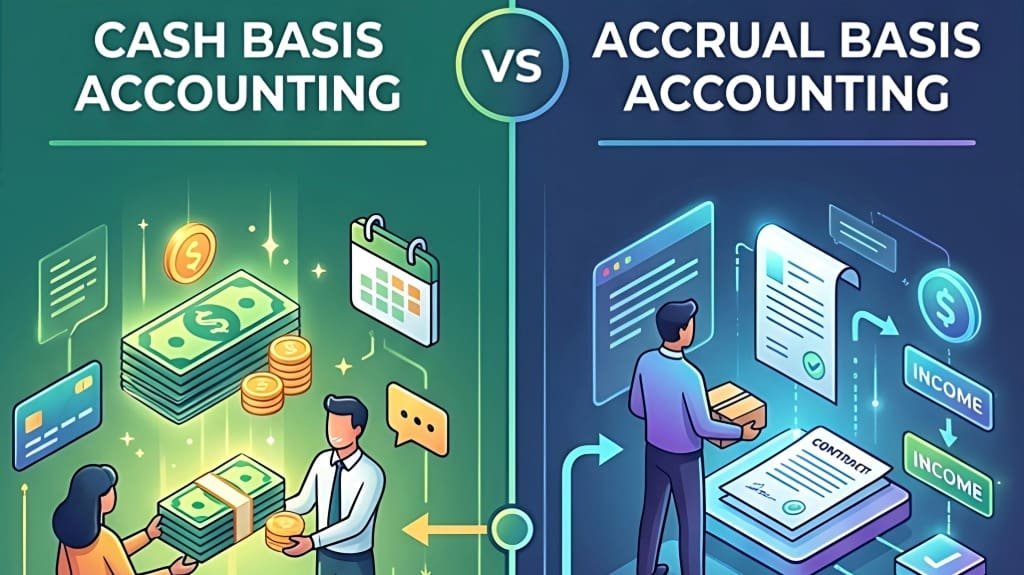
Cash vs. Accrual Accounting: A Beginner-Friendly Explanation
If you are a small business owner, one of the most important bookkeeping decisions you will make is whether your business uses cash accounting or accrual accounting. These terms can sound technical at first, but the difference is actually very straightforward....

What Is a Transaction in Bookkeeping?
In bookkeeping, a transaction is any business activity that has a financial impact on your company. If money comes in, goes out, or moves in a way that changes your financial records, it is usually a transaction that should be recorded. Clear, accurate transaction...

The Basic Bookkeeping System: How Money Moves Through Your Business Records
For many small business owners, bookkeeping feels complicated until they can clearly see the path each dollar takes. In reality, a basic bookkeeping system is simply the process of tracking how money moves through your business, from the moment a sale happens to the...

Financial Freedom: What Independence Looks Like for Service Business Owners
For many service business owners, financial freedom is not about working less. It is about having a clear understanding of the business, confidence in the numbers, and the ability to make smart decisions without constant financial uncertainty. After a busy holiday...

Bookkeeping vs. Accounting: What’s the Difference?
If you’re a small business owner, it’s easy to hear the words bookkeeping and accounting used almost interchangeably. But while they are closely connected, they are not the same thing. Understanding the difference can help you make better financial decisions, avoid...

July 1st – Start of Third Quarter
For many small business owners, July 1st feels like a natural checkpoint. Whether you follow a fiscal calendar that begins a new quarter on July 1 or simply use the date as a midyear financial reset, it is an ideal time to pause, review the numbers, and make...
What Is Bookkeeping? A Simple Definition for Small Business Owners
When you run a small business, “bookkeeping” can sound like one of those behind-the-scenes tasks that only matters at tax time. In plain English, bookkeeping is simply the process of recording, organizing, and keeping track of your business’s financial activity. That...

Why “Busy” Does Not Always Mean “Profitable” in Business or in Life
For many small business owners, being busy feels like a good sign. The phone is ringing, emails are piling up, projects are moving, and the calendar is full. On the surface, that kind of activity can look like success. But in business, and honestly in life too, “busy”...
What Your Profit & Loss Statement Is Really Telling You
For many small business owners, the Profit & Loss Statement, often called the P&L, can feel like just another financial report. But in reality, it is one of the clearest tools you have for understanding the health of your business. It does more than show...